Perfect Boiled Chicken Breast Recipe: Simple, Healthy, and Delicious
Ever had trouble making chicken tender and juicy without it being dry or tasteless? Boiling chicken might be the answer you’ve been looking for. It’s a cooking method that turns regular chicken into a great base for many meals.
Many people get nervous about cooking chicken, fearing it won’t be cooked right. But boiling chicken is easy and always works. It makes the chicken moist and flavorful, perfect for salads or sandwiches.
Whether you’re always on the go or just want to get better at cooking, learning to boil chicken is key. It’s easy, needs just a few ingredients, and always tastes great.
In this guide, we’ll cover everything you need to know about boiling chicken breast perfectly. You’ll learn about the right tools, cooking temperatures, and more. Soon, you’ll cook chicken like a pro.
Table of Contents
Understanding the Art of Poaching Chicken
Poaching chicken turns ordinary chicken breasts into tender, juicy delights. This method is healthier than traditional ways. It keeps your chicken moist and full of flavor.

Learning how long to boil chicken using poaching is easy. It’s a foolproof way to cook perfect protein every time. The secret is keeping the temperature just right and understanding how to cook chicken.
What Makes Poaching Unique
Poaching is different from other cooking methods in key ways:
- Uses liquid at a low temperature (170°F to 180°F)
- Gently cooks food without aggressive boiling
- Preserves moisture and delicate texture
- Prevents tough, dry meat
Benefits of Poaching Chicken
Poaching chicken has many benefits for home cooks:
- Healthier cooking with no added fats
- Consistent, even cooking results
- Versatile protein for multiple recipes
- Easy to season and customize
Temperature Control Essentials
Mastering poached chicken needs precise temperature control. Keeping the liquid between 170°F and 180°F makes chicken tender and juicy. It prevents it from becoming rubbery or overcooked.
Pro tip: Use a reliable meat thermometer to monitor your chicken’s internal temperature for perfect results every time.
Essential Ingredients for Perfectly Boiled Chicken Breast
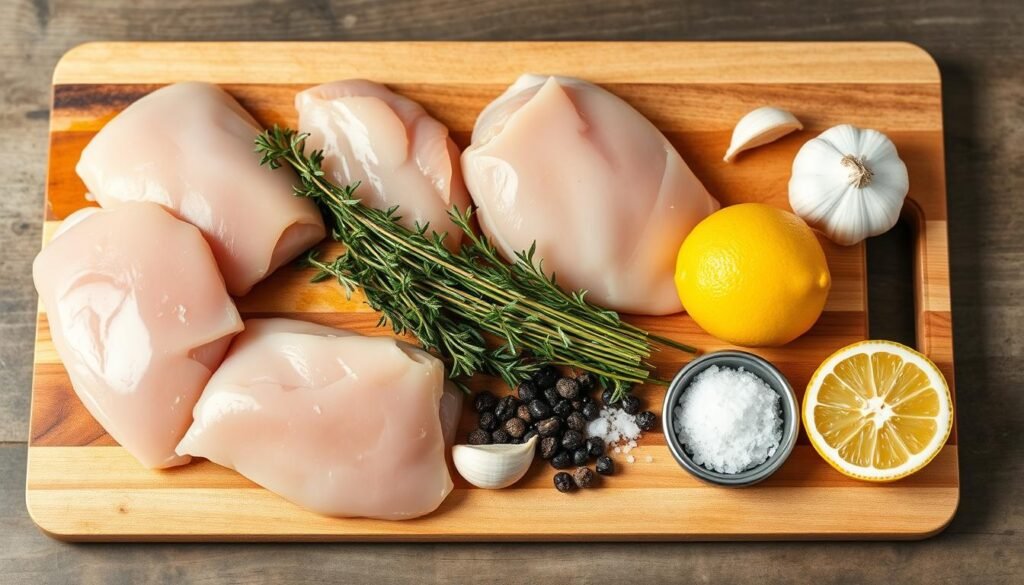
Making a tasty boiled chicken breast is easy. You don’t need a long list of ingredients. Just a few basic things can make your chicken taste amazing.
For a classic boiled chicken breast, you’ll need just a few fundamental ingredients:
- Chicken breasts – Fresh, boneless, and skinless work best
- Water – Filtered or tap water at room temperature
- Salt – A pinch to enhance natural flavors
Water and salt are the main ingredients for your boiled chicken breast. But you can add optional aromatics to make it even better. These ingredients can make your chicken taste like a gourmet dish:
- Fresh herbs like parsley, thyme, or rosemary
- Whole peppercorns
- Garlic cloves
- Lemon slices
- Onion chunks
Pro tip for your boiled chicken breast: Choose high-quality, organic chicken breasts when possible. The better the quality of your primary ingredient, the more delicious your final dish will be.
Remember, simplicity is the ultimate sophistication in cooking!
You probably have most of these ingredients in your pantry and fridge. With just a few simple components, you’ll be ready to prepare a tender, flavorful boiled chicken breast. It’s perfect for many recipes.
Kitchen Equipment You’ll Need
To boil chicken, you need some basic kitchen tools. These tools make cooking easier and better. Knowing how to use them is key to great results.
Before you start, get these important pieces. They help you cook chicken perfectly:
Essential Pots and Tools
- Large Pot: A deep, wide pot that allows chicken to be fully submerged
- Kitchen tongs for safe handling
- Sharp kitchen knife for trimming
- Cutting board
Optional Equipment for Enhanced Results
These tools are not necessary, but can improve your boiling chicken skills:
- Strainer or colander for draining
- Silicone cooking spatula
- Kitchen timer
Temperature Monitoring Devices
Controlling the temperature is key when boiling chicken. Use these precise tools:
- Meat thermometer – Essential for checking internal chicken temperature
- Digital instant-read thermometer
- Probe thermometer with alarm settings
These tools ensure your chicken is boiled perfectly. They guarantee both safety and flavor.
Preparing Your Chicken for Poaching
Starting to boil chicken to shred requires careful preparation. The success of tender, flavorful chicken depends on the initial steps. These steps are crucial before you begin cooking.
First, choose fresh, high-quality chicken breasts. Pick pieces that are the same size for even cooking. Pat the chicken dry with paper towels to remove excess moisture.
- Trim any visible fat or tough connective tissue
- Rinse the chicken under cold water
- Use a sharp knife to remove any unwanted parts
Always start with cold water when boiling chicken. This method ensures even cooking and prevents tough meat. Place the chicken breasts in a large pot, making sure they’re fully covered by water.
Here are more tips for perfect shredded chicken:
- Choose a pot that allows chicken to sit in a single layer
- Use filtered water for the best flavor
- Add optional seasonings like salt, pepper, or herbs
Pro tip: For the best flavor, avoid overcrowding the pot. Give each piece enough space to cook well and absorb seasonings.
Step-by-Step Boiled Chicken Breast Recipe
Learning how long a chicken breast takes to boil is simple. This guide will show you how to make perfectly poached chicken every time. It’s great for both home cooks and meal prep fans. You’ll get tender, juicy chicken with little effort.
Boiling chicken breast needs precision and focus. The secret to success is knowing the right cooking method and timing.
Water Temperature Guidelines
Choose a big pot to fully cover your chicken breast. Use enough water or broth to cover it. Here are key temperature tips:
- Start with a gentle simmer over medium heat
- Keep the water between 160-180°F
- Don’t let it boil too fast, as it can make the meat tough
Cooking Time Instructions
Remember these important timing tips for boiling chicken breast:
- Boneless chicken breasts: 10-15 minutes
- Bone-in chicken breasts: 15-20 minutes
- The thickness of the chicken affects the cooking time
Testing for Doneness
It’s vital to make sure your chicken is cooked through for safety. Here’s how to check:
- Internal temperature method: Chicken should be 165°F when checked with a meat thermometer
- Cut into the thickest part – it should be white with no pink
- Juices should be clear when pierced
Pro tip: Let the chicken rest for 3-5 minutes after cooking. This helps keep it moist and finishes the cooking.
Flavoring Your Poaching Liquid
Turning your poached chicken into a feast starts with a flavorful poaching liquid. The right mix of ingredients can make your chicken go from plain to amazing. It adds rich, complex tastes that make every bite unforgettable.
Your poaching liquid is more than water – it’s a canvas for flavor. Professional chefs say the secret to tasty chicken is in the cooking liquid.
- Herbs: Rosemary, thyme, and bay leaves add depth
- Aromatics: Garlic, onions, and shallots create robust flavor profiles
- Vegetables: Carrots, celery, and leeks contribute subtle sweetness
- Broths: Chicken, vegetable, or even white wine can replace water
Here are some flavor ideas for your poached chicken:
| Flavor Profile | Key Ingredients | Cuisine Inspiration |
|---|---|---|
| Mediterranean | Lemon, oregano, garlic | Greek |
| Asian-Inspired | Ginger, star anise, soy sauce | Chinese |
| Herbal Provence | Lavender, thyme, white wine | French |
Try different ingredients to find your favorite poached chicken flavor. The liquid you pick will not only cook your chicken but also make it taste incredible.
Common Mistakes to Avoid When Boiling Chicken
Learning to boil chicken right means knowing what to avoid. Many people make mistakes that ruin a dish that could be tender and tasty. These errors turn a promising meal into a letdown.
To cook chicken perfectly every time, steer clear of these common mistakes.
Temperature Control Errors
One big mistake is not controlling the water’s temperature well. Boiling water too fast can make chicken tough and rubbery. Instead, keep the water at a gentle simmer, between 160-180°F.
- Never let water boil too hard.
- Keep the heat steady and low.
- Use a digital thermometer to check the temperature
Timing Issues
The time you cook chicken is very important. If it’s not cooked enough, it’s not safe. But cooking it too long makes it dry and stringy.
- Chicken breasts usually need 12-15 minutes.
- Bigger pieces take longer to cook.
- Always check the chicken’s internal temperature reaches 165°F
Seasoning Mistakes
Chicken can taste bland if it’s not seasoned right. Start seasoning before you cook and keep adding flavor as it boils.
- Season the chicken with salt before boiling
- Add things like garlic, herbs, or onions to the water
- Try using broth instead of water for more flavor
Pro tip: Patience is key when learning how to boil chicken. Rushing the process will always compromise your results.
Storage and Meal Prep Tips
Keeping boiled chicken breast fresh is key. After cooking, it’s important to store it right to keep it safe and tasty.
First, cool the chicken down before putting it in the fridge. Here’s how to store it best:
- Cool the chicken completely before storing
- Use airtight containers or sealed plastic bags
- Store in the refrigerator for up to 5 days
Freezing is great for meal prep. Here’s how to freeze boiled chicken breast:
- Portion the chicken into individual servings
- Wrap each portion tightly in plastic wrap
- Place wrapped portions in a freezer-safe container
- Freeze for up to 2 months
Meal prep is easy with boiled chicken breast. Here are some tips:
- Dice for salads and grain bowls
- Shred for tacos and sandwiches
- Slice for quick protein additions to meals
Pro tip: Label your containers with the date of preparation to track freshness!
By using these storage and meal prep tips, you’ll always have tasty boiled chicken breast ready for quick meals.
Creative Ways to Use Your Boiled Chicken
Learning to boil chicken to shred opens up a world of cooking possibilities. Boiled chicken is very versatile and can make many dishes better with little effort. It’s great for meal prep or quick dinners, becoming a key ingredient in your kitchen.
Here are some tasty ways to use your boiled chicken in different recipes:
Salad Sensations
Boiled chicken is perfect for salads. It adds a lot of protein to various salad types:
- Classic Caesar salad with crisp romaine
- Southwestern-style mixed green salad
- Mediterranean chopped salad
- Cobb salad with fresh vegetables
Sandwich Transformations
Boiled and shredded chicken can make sandwiches better in many ways:
- Chicken salad with herbs
- Pulled chicken on soft rolls
- Toasted chicken club sandwich
- Pita pocket chicken wraps
Main Dish Inspirations
Boiled chicken is great in many main dishes that need cooked protein:
| Dish Category | Recommended Recipes |
|---|---|
| Mexican | Enchiladas, Quesadillas, Chicken Tortilla Soup |
| Italian | Chicken Alfredo, Pasta Bakes, Stuffed Shells |
| Asian-Inspired | Stir-Fries, Chicken Fried Rice, Lettuce Wraps |
Mastering how to boil chicken to shred opens up endless cooking possibilities. Your boiled chicken can fit into many cuisines and meal types, making cooking both easy and fun.
Health Benefits and Nutritional Information
Boiled chicken breast is a nutritional powerhouse for health-conscious eaters. It’s a lean protein source with many health benefits. This makes it a great choice for a balanced diet.
The nutritional profile of boiled chicken breast is impressive. A typical serving gives you:
- High-quality protein (around 31 grams per 100 grams)
- Minimal fat content
- Zero carbohydrates
- Essential nutrients like vitamin B6 and selenium
Poaching chicken breast keeps nutrients high and calories low. The cooking method preserves nutrients that might be lost through other preparation techniques. Boiling chicken breast makes a meal that supports muscle growth, aids weight management, and promotes overall health.
Protein from boiled chicken breast is key for:
- Muscle repair and development
- Supporting metabolism
- Maintaining healthy immune function
- Providing sustained energy
Your body will thank you for choosing boiled chicken breast. It’s perfect for athletes, fitness enthusiasts, and anyone looking for a clean, wholesome protein. It supports your wellness goals.
Troubleshooting Your Boiled Chicken
Cooking chicken can be tricky, especially when learning how long to boil chicken. Even experienced home chefs face challenges. Knowing common problems and their solutions can help you master boiling chicken breasts.
Identifying Chicken Cooking Issues
When boiling chicken, several typical problems might arise:
- Undercooked chicken with pink or raw centers
- Dry, tough meat from overcooking
- Bland flavor due to insufficient seasoning
- Uneven cooking across the chicken breast
Quick Fixes for Boiling Chicken
If your chicken isn’t perfectly cooked, don’t panic. Here are some practical solutions:
- Undercooked Chicken: If the center remains pink, return the chicken to the pot. Cover and cook for an additional 2-3 minutes.
- Tough Texture: Lower the water temperature and reduce cooking time to prevent protein breakdown.
- Lack of Flavor: Enhance your poaching liquid with herbs, spices, or aromatics.
Precision Cooking Techniques
To ensure perfectly boiled chicken every time, consider these expert tips:
| Problem | Solution | Recommended Action |
|---|---|---|
| Uneven Cooking | Use uniform chicken breast sizes | Keep water at a gentle simmer (180-190°F) |
| Temperature Control | Maintain steady heat | Keep water at gentle simmer (180-190°F) |
| Moisture Retention | Prevent dryness | Keep water at a gentle simmer (180-190°F) |
Remember, practice makes perfect when learning how long to boil chicken. Each cooking attempt brings you closer to mastering this essential culinary skill.
Conclusion
Boiling chicken is a game-changer in cooking. It turns simple ingredients into tasty, healthy meals. By learning how to boil chicken, you’ve found a way to make protein that’s tender and full of flavor.
It’s easy to do: pick good chicken breasts, control the temperature, and try different seasonings. Now, you can make lean protein for meals, salads, sandwiches, and more.
Getting better at boiling chicken takes practice. Start with a basic recipe and then try new flavors. Each time, you’ll get better and feel more confident in the kitchen.
We encourage you to share your boiled chicken stories, ask questions, and meet other home cooks. Your cooking journey begins now. Enjoy the simplicity and taste of perfectly boiled chicken breasts!
FAQ
How long does it take to boil a chicken breast?
Can I add flavor to boiled chicken?
Is boiled chicken healthy?
How do I know when chicken is fully cooked?
Can I freeze boiled chicken?
What’s the difference between boiling and poaching chicken?
How do I prevent chicken from becoming tough?
Can I use boiled chicken in other recipes?
Have you tried our recipes?
There are no reviews yet. Be the first one to write one.