
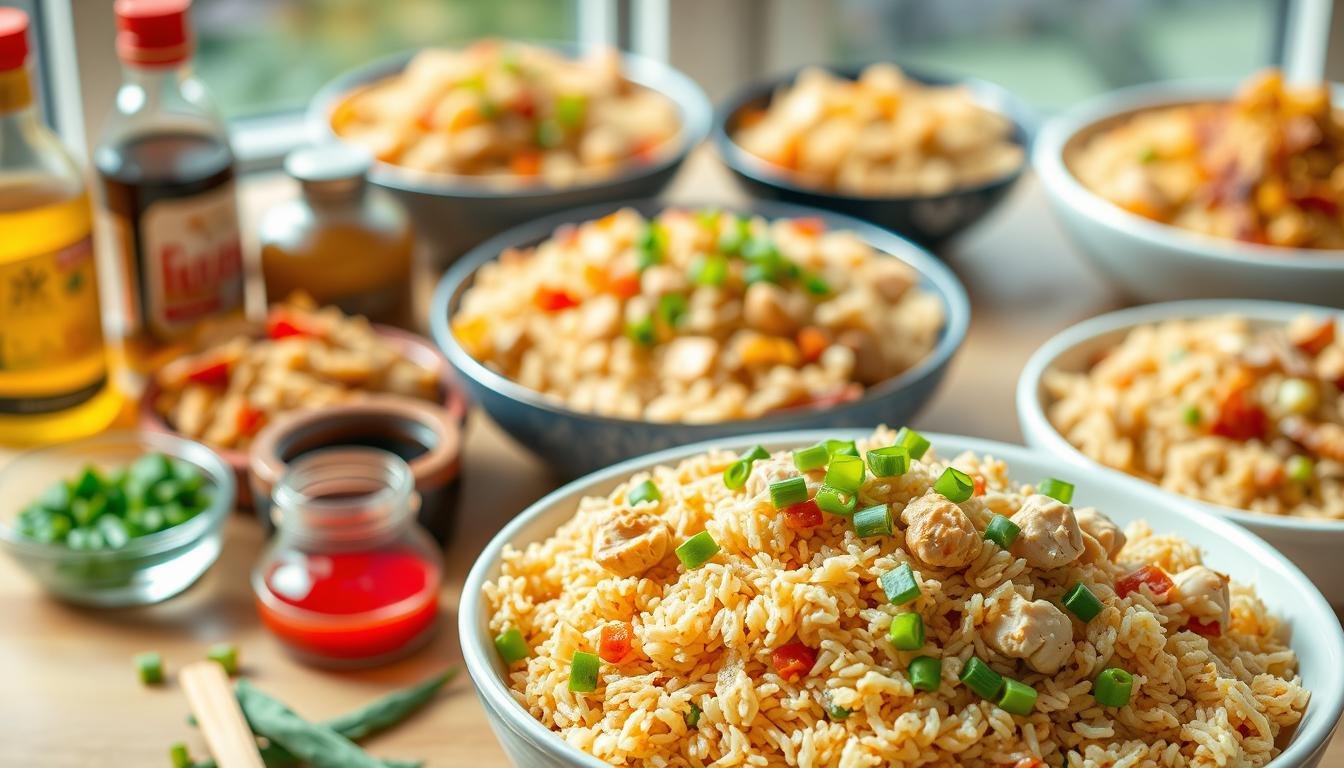
10 Delicious Fried Rice Recipe Ideas to Try Tonight
Every kitchen has a secret weapon. For me, it’s turning leftover rice into magic. Fried rice recipe is more than meal; it’s an adventure in your kitchen.
Imagine making simple ingredients into dishes that make you happy and full. These 10 fried rice recipes will change your dinner game. They’re perfect for busy people, students, or anyone looking for new ideas.
We’ll look at classic Chinese recipes and new twists. Each one is quick, tasty, and can be made with what you already have. You’ll make delicious meals with ingredients you probably have at home.
Get ready to improve your cooking and see how fun homemade fried rice can be. Your taste buds are in for a treat. You’ll see that amazing meals don’t need to be hard or expensive.
Table of Contents
Essential Guide to Perfect Fried Rice Recipe
Learning to make fried rice recipe starts with knowing the basics. Chinese rice cooking needs special techniques to make your dish stand out. These techniques can turn simple ingredients into a tasty meal.
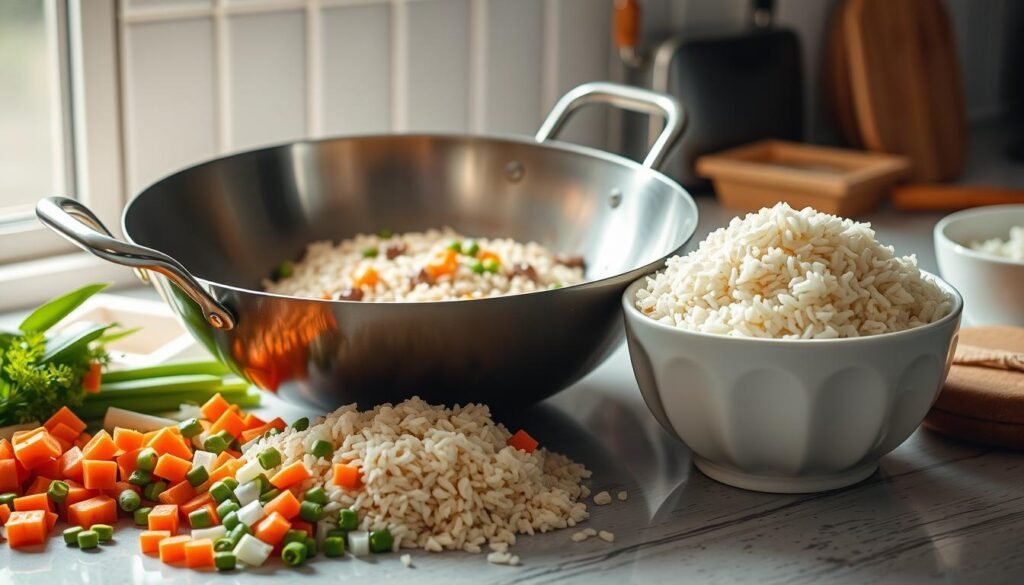
Creating great fried rice takes focus on a few key points. Your success comes from picking the right ingredients and using the right cooking methods.
Choosing the Right Rice Type
The secret to authentic Chinese rice dishes is in the rice choice. Not all rice is good for fried rice recipe. Your top picks are:
- Medium-grain white rice
- Long-grain jasmine rice
- Day-old refrigerated rice
Proper Rice Preparation Techniques
Getting rice ready for stir-frying needs special steps for the right texture. Cold, day-old rice is best because it’s drier and easier to separate during cooking.
- Cook rice a day before
- Spread rice on a flat tray
- Refrigerate uncovered overnight
- Break up any clumps before cooking
Key Cooking Equipment Needed
The right cooking tools can make a big difference in your fried rice recipe making. Professional chefs suggest:
- Carbon steel wok
- High-heat resistant spatula
- Large non-stick skillet
By mastering these essential techniques, you can turn simple ingredients into a top-notch Chinese rice dish. It will be as good as what you find in restaurants.
Classic Chinese Fried Rice Base
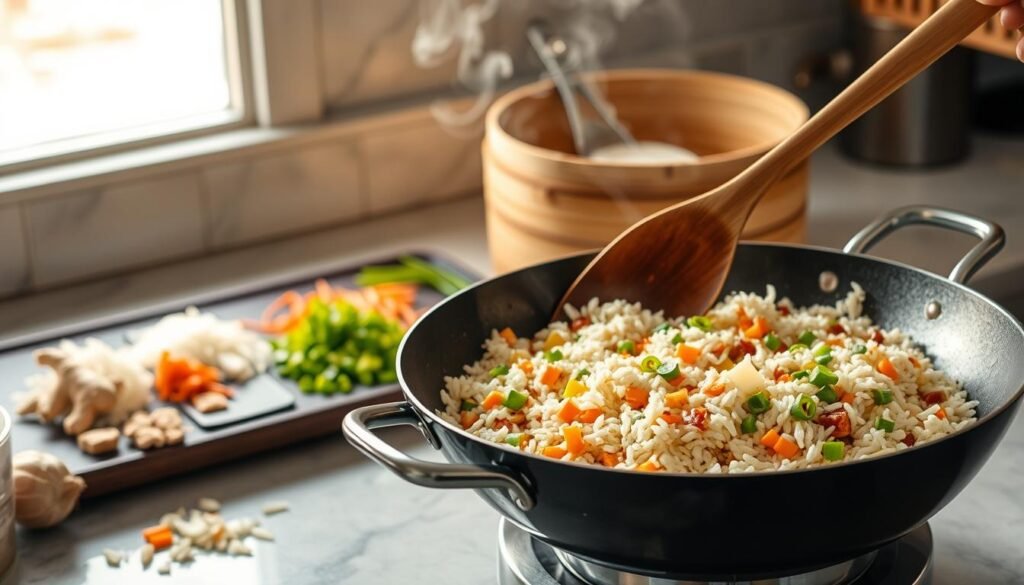
Making authentic homemade fried rice starts with the right ingredients and techniques. These elements turn simple parts into a tasty dish.
Your chinese fried rice needs day-old rice for the best texture. Fresh, warm rice is too moist and makes fried rice soggy. Day-old rice gives you that crispiness found in restaurants.
- Essential ingredients for classic chinese fried rice:
- Cooked white rice
- Eggs
- Green onions
- Carrots
- Peas
When making homemade fried rice, the order of cooking is key. Start by scrambling eggs in a hot wok or skillet. This makes soft, fluffy egg pieces that mix well with the rice. Then, stir-fry your veggies quickly to keep them crisp and colorful.
To get that real wok hei flavor, keep the heat high and stir constantly. Quick tossing helps create a slight char without burning. This adds depth and smokiness to your fried rice, making it truly special.
Pro tip: Use a well-seasoned wok or cast-iron skillet for the best results and most authentic flavor profile.
Mastering these basic techniques turns simple ingredients into a delicious homemade fried rice. It’s as good as any restaurant version.
The Secret to Restaurant-Style Homemade Fried Rice
Learning to make fried rice at home is an art. It needs precision and technique. Chefs keep secrets to make Chinese fried rice that tastes amazing and feels perfect in your mouth.
To make ordinary ingredients into a great meal, follow some key steps. These steps will make your fried rice go from good to great.
Professional Cooking Techniques
- Use a scorching hot wok or large skillet for authentic flavor
- Cook ingredients in small batches to prevent moisture buildup
- Stir-fry quickly to maintain ingredient crispness
- Create the signature wok hei smoky essence through high-heat cooking
Temperature Control Tips
When making Chinese fried rice, controlling temperature is key. High heat keeps the rice from getting soggy. It makes sure each grain is cooked just right.
| Cooking Stage | Recommended Temperature | Cooking Time |
|---|---|---|
| Rice Preparation | Medium-High | 3-4 minutes |
| Vegetable Stir-Frying | High | 1-2 minutes |
| Final Mixing | High | 2-3 minutes |
Seasoning Balance Guide
To get the flavor right in fried rice, know how to season. Start with a little sauce and add more as needed.
- Use light soy sauce sparingly
- Add sesame oil for depth
- Balance saltiness with a touch of sweetness
- Experiment with white pepper for authentic Chinese fried rice taste
Pro tip: Always use day-old rice for the best texture and prevent clumping during cooking.
Veggie-Packed Healthy Fried Rice Options
Make your homemade fried rice a nutritional powerhouse by adding colorful veggies. Fried rice can become a meal full of vitamins and minerals. It will also satisfy your taste buds.
When making vegetable-packed fried rice, pick a mix of vibrant ingredients. They should add both nutrition and flavor. Some great choices include:
- Crisp broccoli florets
- Sweet bell peppers
- Tender carrots
- Earthy mushrooms
- Fresh green peas
To keep nutrients in your fried rice, quick-stir frying is essential. Cut veggies into uniform sizes for even cooking. Sauté them briefly at high heat to keep them crunchy and nutritious.
Using brown rice can add even more nutrition. It brings fiber, protein, and a nutty taste to your fried rice. Try different veggie mixes to keep your meals interesting and healthy.
Pro tip: Add a handful of leafy greens like spinach or kale in the last minute of cooking for an extra nutrient punch!
Protein-Rich Fried Rice Variations
Make your fried rice more than just a side dish by adding protein. Chinese fried rice gets a boost in nutrition and taste with different proteins. These ingredients make your meal more satisfying.
Trying out various proteins lets you tailor your fried rice to your taste. Whether you prefer meat, seafood, or plant-based options, there’s a perfect protein-rich fried rice for you.
Chicken and Egg Combinations
Chicken is a top choice for fried rice. To keep it tender and tasty:
- Dice chicken into small, uniform pieces
- Marinate in soy sauce for 15 minutes before cooking
- Stir-fry on high heat to lock in moisture
- Add beaten eggs for extra richness and protein
Seafood Additions
Seafood can turn your Chinese fried rice into a fancy dish. Shrimp, scallops, and fish add unique textures and tastes.
- Use fresh or frozen seafood
- Cook seafood separately to prevent overcooking
- Add delicate seafood at the end of cooking
Vegetarian Protein Sources
Vegetarians can enjoy protein-rich fried rice with plant-based options:
- Tofu: Crisp cubes add substantial protein
- Tempeh: Nutty flavor with high protein content
- Edamame: Green soybeans provide complete protein
“The key to great fried rice is balancing proteins with fresh ingredients and perfect seasoning.”
Essential Seasonings and Sauces
Learning to make fried rice is all about mastering seasonings. Chinese rice dishes come to life with the right mix of flavors. These seasonings turn simple ingredients into amazing dishes.
The key to authentic Chinese rice seasonings includes a few important ingredients:
- Soy Sauce: This umami booster adds depth and color
- Sesame Oil: It gives a nutty, aromatic flavor
- White Pepper: It adds a subtle, warming heat
Professional chefs say using aged soy sauce is best for real flavor. Just a few drops can make your Chinese rice amazing.
Want to try more seasonings? Here are some great ones:
- Oyster Sauce: It adds a rich, sweet complexity
- Hoisin Sauce: It brings a sweet and tangy taste
- Chili Oil: It adds a spicy kick for bold flavors
The secret to great fried rice is balancing these seasonings. Start with small amounts and adjust to taste. Let each flavor stand out without overpowering the others.
Time-Saving Preparation Tips
Making tasty homemade fried rice doesn’t have to take a lot of time. With a few smart tips, you can quickly and efficiently make fried rice. This will change your weeknight cooking for the better.
Meal Prep Strategies for Perfect Fried Rice
Great homemade fried rice begins with smart prep. Here are some top meal prep tips:
- Cook rice ahead and chill it for the best texture
- Chop veggies and proteins the night before
- Keep prepped items in sealed containers
- Use leftover rice for better fried rice
Quick-Cook Methods for Busy Cooks
For those in a hurry, these quick methods make delicious fried rice fast:
- Use a hot wok or big skillet
- Get ingredients ready before cooking starts
- Cook at high heat for quick results
- Keep moving ingredients to avoid burning
Smart Storage Solutions
Right storage keeps your fried rice fresh and tasty. Refrigerate in airtight containers and eat within 3-4 days for the best taste. When reheating, add a bit of water to keep it moist.
Pro tip: Always cool fried rice completely before refrigerating to prevent bacterial growth.
By using these quick tips, you’ll make your fried rice prep faster. You’ll enjoy tasty meals with less effort.
Common Mistakes to Avoid
Learning to make fried rice can be challenging, even for skilled cooks. Knowing the common mistakes helps you make authentic Chinese fried rice. It can even match the quality of restaurant dishes.
When cooking fried rice, the rice’s temperature is key. A common error is using hot, freshly cooked rice. This makes the rice mushy and clumpy. The trick is to use cold, day-old rice that’s been stored in the fridge.
- Avoid overcrowding the pan when cooking Chinese fried rice
- Use high heat to prevent soggy ingredients
- Add ingredients in the correct order
- Stir constantly to prevent sticking
Temperature control is also vital for perfect fried rice. Your wok or skillet must be very hot before adding ingredients. Cold pan = soggy rice. Make sure your cooking surface is hot to get that crispy texture.
Seasoning is an art in making fried rice. Many home cooks either don’t season enough or add too much sauce. The goal is to find the right balance. Use soy sauce, sesame oil, and other seasonings carefully. This way, you enhance the natural flavors of your ingredients without overpowering them.
“Perfect fried rice is about technique, not just ingredients” – Professional Chef
By avoiding these common mistakes, you’ll make your fried rice truly exceptional. It will impress your family and friends every time you serve it.
Asian-Inspired Fusion Variations
Try new things with your homemade fried rice by mixing Asian flavors. These changes turn simple fried rice into a world of taste. It’s a fun way to surprise your taste buds.
Fusion fried rice lets you play with many flavors. It keeps the dish cozy but adds a twist. You can mix in ingredients from various Asian cuisines to make something special.
Korean-Style Additions
Korean food adds bold and spicy touches to fried rice. Here are some great ingredients to try:
- Kimchi for tangy fermented flavor
- Gochujang (Korean red chili paste) for heat
- Sesame oil for depth
- Crispy fried egg on top
Japanese Culinary Influences
Japanese cooking can make your fried rice better with special ingredients and methods:
- Short-grain rice for authentic texture
- Nori (seaweed) flakes for umami
- Furikake seasoning blend
- Mirin for subtle sweetness
Thai-Inspired Elements
Thai food adds bright, aromatic flavors to fried rice:
- Fish sauce for complex saltiness
- Fresh lime juice
- Thai basil leaves
- Chili peppers for optional heat
The beauty of fusion fried rice lies in its adaptability – your kitchen becomes a canvas for culinary creativity!
Trying these Asian-inspired changes will make your fried rice amazing. It’s a fun trip through different tastes.
Leftover Rice Storage and Reheating
Keeping your tasty chinese rice fresh is key. Homemade fried rice stays delicious with the right storage. Knowing how to store and reheat your leftovers ensures you can enjoy it again and again.
For storing homemade fried rice, use airtight containers. These protect against moisture and bacteria. Glass or BPA-free plastic containers are best for keeping food fresh.
- Refrigerator storage: Keep fried rice for up to 4 days
- Freezer storage: Preserve for up to 2 months
- Always cool rice to room temperature before storing
Reheating is crucial to keep your rice’s texture and flavor. Here are some tips:
| Reheating Method | Best Practices |
|---|---|
| Microwave | Add 1-2 tablespoons of water, cover, and heat in 30-second intervals |
| Stovetop | Use medium heat, stir frequently, add small amount of oil |
| Oven | Spread rice evenly, cover with foil, heat at 300°F for 10-15 minutes |
Pro tip: Avoid reheating rice multiple times, as this can compromise food safety and quality.
By sticking to these storage and reheating tips, your leftover homemade fried rice becomes a second-day delight. It will taste almost as fresh as when it was first made.
Conclusion
Your journey through fried rice recipes has given you the skills to make amazing meals. Chinese fried rice is more than a side dish. It’s a canvas for creativity and technique.
Now, you can make delicious variations that fit your taste and diet. You’ve learned how to balance flavors, choose the right rice, and cook like a pro. Each try will help you get better at making your own special dish.
Fried rice is very versatile. It’s great for quick meals or for those who love to experiment. These recipes are a solid base for tasty cooking. Remember, practice and passion are key to mastering any dish.
With these tips, you’re ready to start a tasty cooking journey. Be open, trust your instincts, and enjoy making dishes that show off your growing skills. Your family and friends will love what you create.
FAQ
What type of rice is best for making fried rice?
How do I prevent my fried rice from becoming soggy?
Can I make fried rice with freshly cooked rice?
What’s the secret to achieving “wok hei” flavor at home?
How can I make vegetarian fried rice?
What are the essential seasonings for authentic Chinese fried rice?
How long can I store leftover fried rice?
Can I freeze fried rice?
What’s the best way to reheat fried rice?
How can I make my fried rice more nutritious?
Have you tried our recipes?
There are no reviews yet. Be the first one to write one.